How to build a flexible grocery list for an unpredictable week
· Editorial team newswithannaphoenix.com
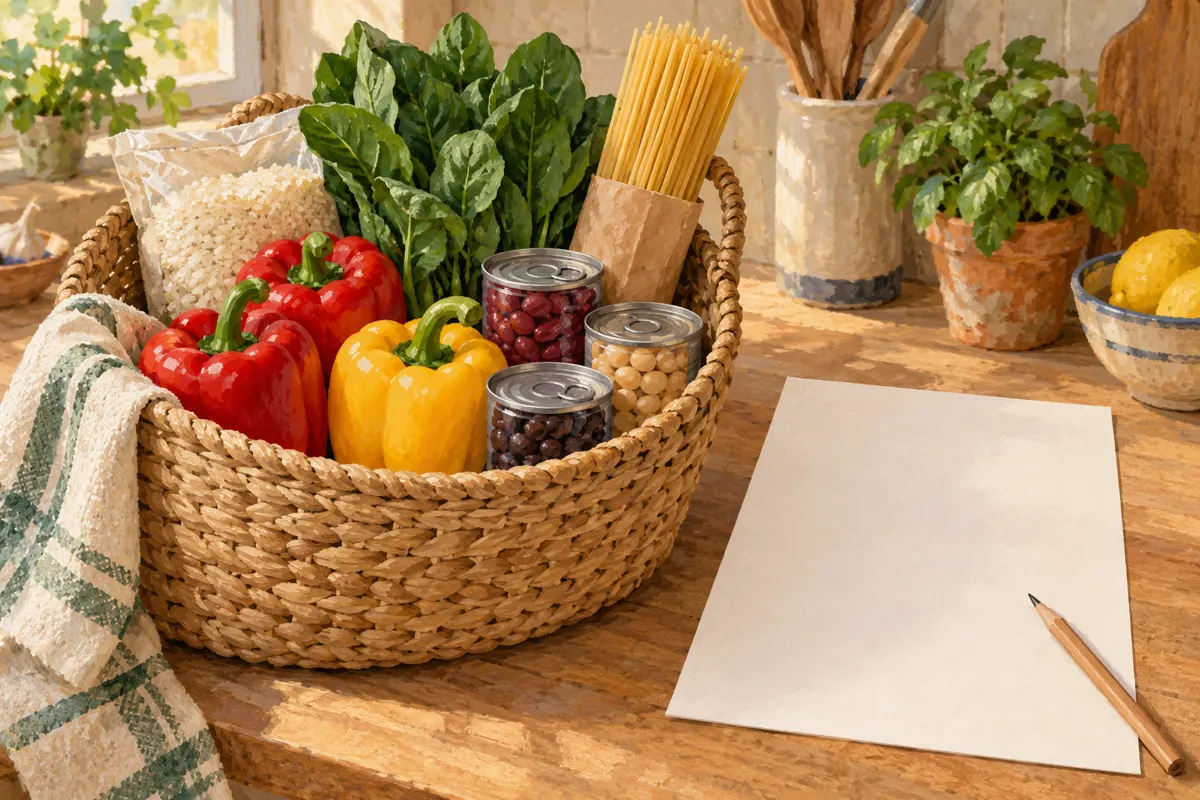
Build your grocery list around meals you can move between days, ingredients that work in several dishes, and a couple of pantry-based backups. Buy fresh food for the dinners you reasonably expect to cook, then keep an optional top-up list for later. That gives you a starting plan without requiring every evening to go as expected.
Start with the meals you expect to eat at home
Before choosing recipes, look at the week ahead. Separate likely dinners at home from uncertain evenings: a late meeting, a possible invitation, or a night when different household members will eat separately. Leave room for those changes instead of assigning a fresh-food recipe to every day.
One proposed approach is to choose three movable dinners, one meal built from ingredients already on hand, and two backup options. Adjust that mix to your household. The point is to have enough choices without buying a separate basket of perishables for each possible evening.
- Check the refrigerator, freezer, and pantry.
- Identify ingredients you want to use first.
- Estimate how many people will eat each planned meal.
- Include breakfast, lunch, and snacks so dinner planning does not hide other needs.
Give fresh ingredients more than one job
Choose meals with overlapping ingredients. A proposed dinner set might include bean-and-pepper tacos, rice bowls, and pasta with spinach. Peppers can go into tacos or bowls; spinach can go into bowls or pasta. Each ingredient has somewhere else to go if a dinner disappears from the schedule.
Apply the same check to refrigerated extras. If you buy yogurt for a taco topping, plan another use your household already enjoys, such as breakfast. If an ingredient serves only one recipe, consider a smaller quantity, a suitable frozen alternative, or saving that recipe for a more predictable week.
Overlapping ingredients still need realistic quantities. Add together what the meals require, then subtract what you already have. Avoid buying enough for every alternative as though you will cook them all. The second use is often a replacement for the first, rather than an additional meal.
Keep a reusable list and two complete backups
Create a master list of staples you regularly use, organized by store section. Copy it for each shopping trip and remove anything you already have. Add the ingredients needed for this week’s meals. Update the master when your habits change so it remains a useful reminder.
For an unpredictable week, the proposed addition is a pair of complete backup meals. Choose familiar options that require little preparation and do not depend on the week’s fresh purchases. Check every component, including sauces and seasonings, before calling a backup ready.
- Pasta, canned tomatoes, canned beans, and a seasoning you like.
- Rice, frozen vegetables, and canned beans with a pantry sauce.
- A portion of soup already in the freezer, with bread you have on hand.
Use a template that connects purchases to meals
The following proposed template works in a notebook or a phone note. Repeat the fresh-ingredient line for each perishable purchase. If you cannot name a second use, reconsider the quantity or whether you need it this week.
- Likely dinners at home: ___. People eating: ___.
- Uncertain evenings: ___.
- Ingredients already available to use first: ___.
- Movable meals: ___, ___, and ___.
- Fresh ingredient: ___. First meal: ___. Alternative meal: ___. Quantity needed: ___. Already have: ___. Buy: ___.
- Backup meal one: ___. Missing ingredients: ___.
- Backup meal two: ___. Missing ingredients: ___.
- Breakfast, lunch, and snack additions: ___.
- Optional fresh-food top-up: ___. Buy only if: ___.
Make a small adjustment when plans change
Keep the optional top-up separate from the main shopping list. It might contain salad greens for a confirmed dinner or fruit when the supply runs low. If another trip is inconvenient, choose meals that your initial purchases and backups can cover.
- Move the affected meal to another open evening.
- Check which fresh ingredients still need a use.
- Switch to their alternative meal if that fits better.
- Use a backup when cooking time is limited.
- Before shopping again, carry unused ingredients into the next plan.