How to keep a food-scrap bin clean in a small kitchen
· Editorial team newswithannaphoenix.com
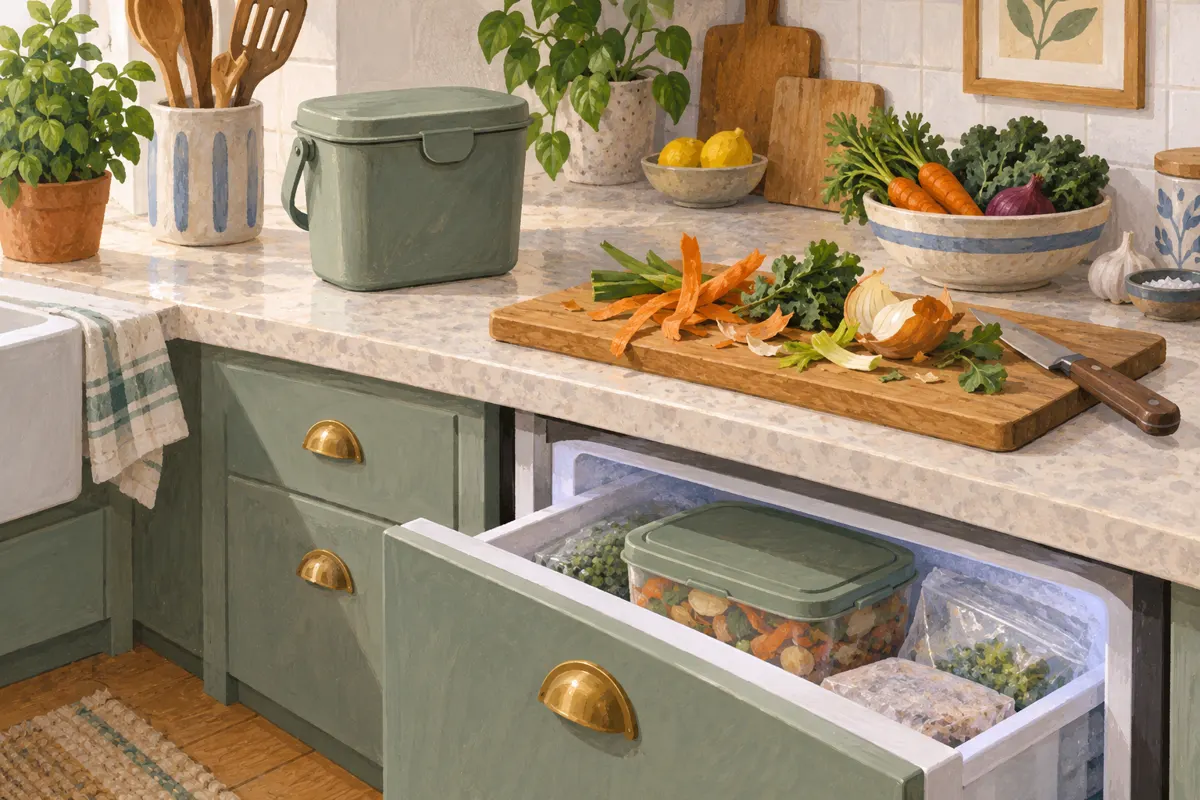
Keep a kitchen food-scrap bin clean by emptying it regularly, washing away residue and limiting the liquid that goes in with scraps. Choose a small, washable container, keep it away from heat and use freezer storage when scraps must wait for pickup or drop-off. Check your destination compost program’s rules before adding food, paper or liners.
Choose a container you can easily wash
A kitchen scrap bin usually holds food temporarily; it does not turn those scraps into finished compost. For a small kitchen, the useful question is how easily you can fill, empty and clean it. A large bucket saves trips only if you can keep its contents from becoming unpleasant while they wait.
Our practical proposal is a compact, washable container with a lid, a wide opening and an interior you can reach with a brush or sponge. An existing suitable container may be enough. Before choosing a permanent spot, check that you can lift it out and open the lid comfortably.
Keep it in a cool spot away from direct sunlight and cooking heat. Under the sink can work if the space is accessible. A charcoal filter may help contain odors, but it still needs replacement according to the product’s instructions, and the bin still needs regular emptying.
Check what your compost destination accepts
Use the accepted-material list from the service, drop-off site or compost system receiving your scraps. Do not assume that advice for a backyard pile applies to a collection program. Meat, fish and dairy can cause odors quickly and are generally unsuitable for a basic home compost pile; check your program’s instructions before collecting them.
- Food scraps: confirm which raw and cooked foods are accepted.
- Paper: check whether newspaper, paper bags, napkins or other paper products are allowed.
- Liners: confirm the specific bag requirements rather than relying on a “compostable” label.
A liner is optional. It can make emptying easier, but some compostable bags do not break down in ordinary home compost systems. If your destination does not accept your liner, collect scraps directly in the washable container.
Keep excess moisture out
Wet scraps and pooled liquid make the bin harder to manage. As a practical proposal, let washed peelings drain before adding them and avoid pouring soup, drinks or cooking liquid into the container. The aim is to collect solid scraps without creating a puddle underneath them.
If your destination accepts it, place a little newspaper or plain paper bag material at the bottom to absorb moisture. Replace it when you empty the bin. You do not need to calculate a compost recipe inside this temporary collection container.
If the bottom becomes soggy or the container starts smelling, empty and wash it sooner. Adding more dry material should not become a reason to keep old scraps in the kitchen longer.
Use the freezer when scraps have to wait
Freezer storage is useful when pickup or drop-off is several days away, or when a warm kitchen makes room-temperature storage difficult. Freezing helps control odors while scraps wait; it does not turn them into compost.
- Choose a small, freezer-safe container with a lid that fits your available space.
- Collect scraps during meal preparation, then transfer them to the freezer.
- Empty the frozen scraps into the approved collection container when you leave for drop-off or prepare for pickup.
- Wash the reusable container before starting the next batch.
Empty, wash and reset the bin
Regular emptying is the main defense against odor. The right interval depends on kitchen temperature, the scraps you collect and how quickly they accumulate. Do not wait for the bin to be full if it already smells.
- Transfer the scraps to their approved destination and remove any stuck pieces.
- Wash the container and lid with dish soap and water, following the container’s care instructions.
- Clean the rim, lid underside and any removable parts where residue collects.
- Rinse and let the container dry before replacing an accepted liner or returning it to use.
If odors return quickly, shorten the storage time, move the bin somewhere cooler or switch to freezer storage. These changes address the conditions that let scraps become smelly and keep the routine manageable in a small kitchen.