How to organize a small kitchen for two people cooking together
· Editorial team newswithannaphoenix.com
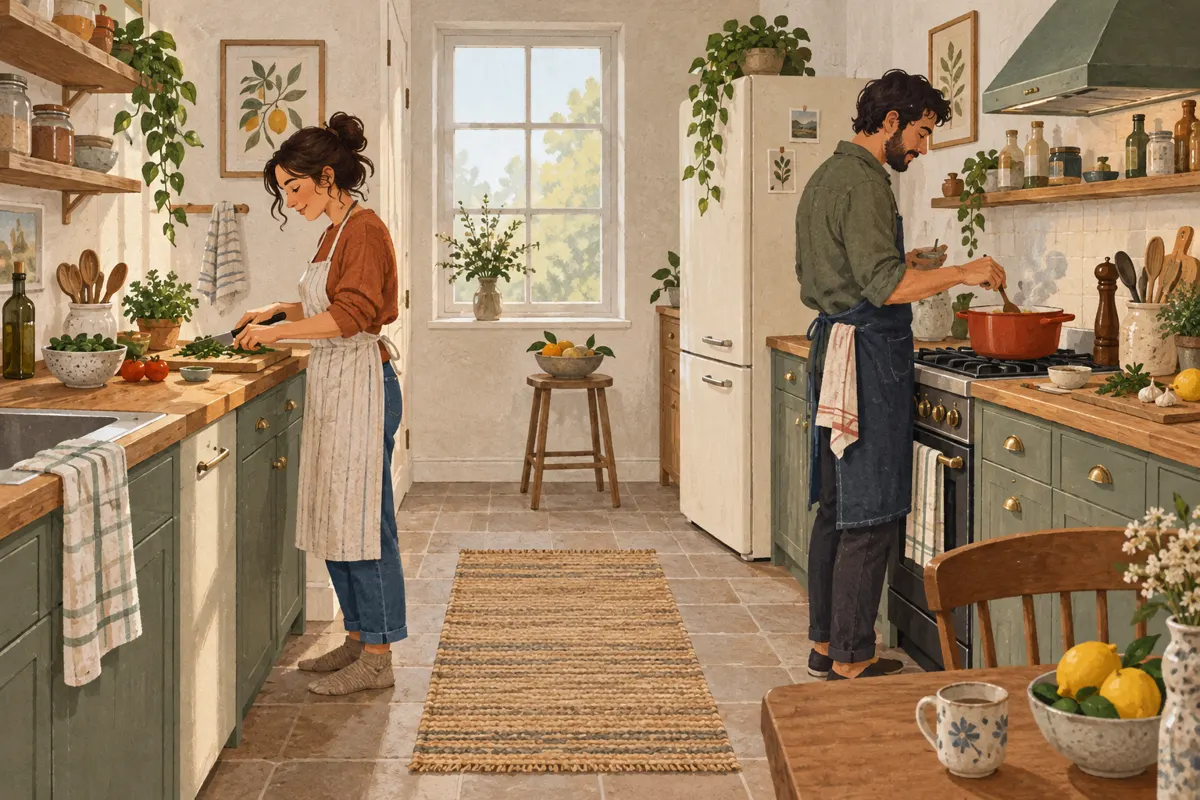
Organize a small kitchen for two cooks by giving each person a preparation spot, keeping shared tools within easy reach, and agreeing on who uses the stove and sink during each stage of the meal. Start by clearing counters and dividing tasks. The editorial proposals below offer a practical way to arrange the space you already have.
Give each cook a preparation spot
Separate work zones are a useful starting point for a kitchen shared by two cooks. In a small room, these can be modest stretches of counter rather than permanent stations. Each person needs somewhere to put a cutting board, ingredients, and a bowl without spreading into the other person’s workspace.
Our proposal is to divide the available surfaces according to the meal. One person might prepare vegetables near the sink while the other measures ingredients or assembles a salad at the opposite end. Avoid placing both boards beside the stove if that also blocks access to drawers or the refrigerator.
- Clear mail, decorative objects, and appliances you will not use for the meal.
- Give each station a cutting board and a container for prepared ingredients.
- Leave a clear, suitable surface for setting down hot cookware.
- If using a nearby table for cold preparation, keep its chairs and supplies out of the kitchen passage.
Assign tasks around the stove and sink
Two preparation spots cannot remove every shared point. The sink, stove, and refrigerator may still require turns. Separating preparation, cooking, and cleaning activities is part of the source’s approach to a kitchen for two people; you can apply that principle through task assignments without changing the room.
For a simple dinner, our proposal is for one person to manage pans and cooking times while the other handles chopping, mixing, and assembling plates. Change roles between meals if you prefer. The purpose is to make responsibility clear so both people do not reach for the same pan or need the sink at the same moment.
- Read the recipe together and identify tasks that can happen at the same time.
- Collect ingredients and cookware before either person starts cooking.
- Wash produce together, then free the sink for the next task.
- Choose who will handle the stove and who will prepare the remaining components.
- Say when you need to pass behind someone or move hot cookware.
Put tools where the work happens
Our storage proposal is to place everyday items beside the task they support. Keep mixing bowls and measuring tools near the preparation area, cooking utensils near the stove, and washing supplies near the sink. Choose positions that let someone retrieve an item without reaching across the other cook’s board or hot pan.
Shared tools need a predictable home during cooking as well as afterward. A small tray can hold measuring spoons, a peeler, or other items both people use. Return them there when finished instead of leaving them beneath ingredients. Keep knives in a secure, visible place rather than loose among shared supplies.
- Move occasional-use equipment away from the easiest-to-reach storage.
- Keep only the utensils needed for the current meal on the counter.
- Use two tools you already own when both cooks need one simultaneously.
- Consider buying a duplicate only if the same missing tool repeatedly interrupts preparation.
Keep doors and walking routes clear
A shared kitchen needs room for movement as well as preparation. The source highlights aisle clearance and refrigerator placement as considerations for two cooks. For an existing small kitchen, begin by checking what happens when the refrigerator, dishwasher, and frequently used drawers are open.
Our proposal is to move loose obstacles before considering additional furniture. A cart may add storage but also occupy the place someone needs to stand. Keep stools, bags, and bins out of the route between stations. Close drawers after retrieving tools, and unload the dishwasher before cooking if its open door would interrupt movement.
Reset the kitchen as the meal progresses
In a compact kitchen, finished tasks should release space for the next ones. Our proposal is to clear each station when its preparation is complete: put ingredients away, gather scraps, and move used bowls to an agreed washing area. Keep dirty dishes off the surface reserved for hot cookware.
After the meal, discuss the specific moments when you blocked each other. Was a board covering the utensil drawer? Did both people need the sink? Change one arrangement for the next dinner. A useful setup follows how you actually cook together, and it can change with the menu.