How to pack a reusable meal kit for a vacation rental
· Editorial team newswithannaphoenix.com
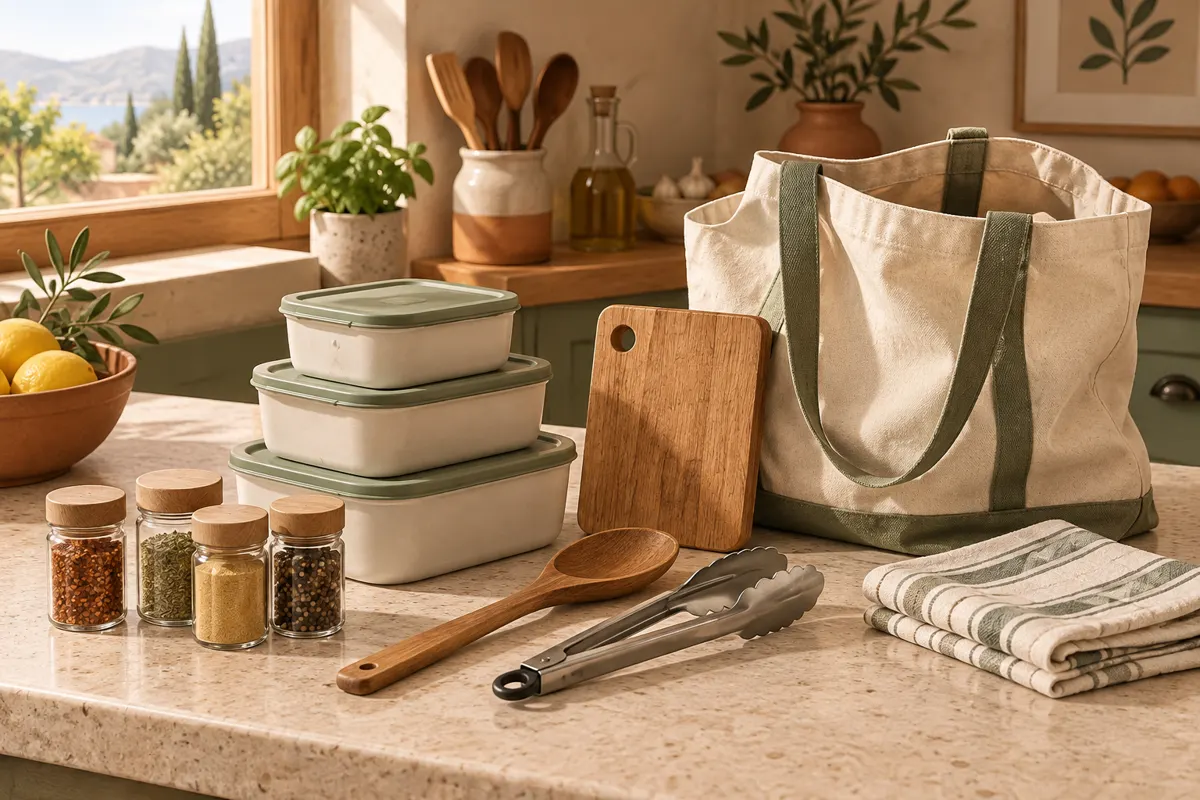
Pack a reusable meal kit by checking what the rental provides, choosing a few simple meals, and bringing only the tools, containers, and cleanup supplies those meals need. Start with a small kit that fits in one bag; add bulky cookware only when you have confirmed a gap and have room to carry it.
Check the kitchen before choosing your kit
A listing that says “full kitchen” may leave practical questions unanswered. Our proposed starting point is to ask the host about specific equipment for the meals you expect to make. A photograph can help you understand the space, but it may not show what is inside drawers and cupboards.
- Cooking: stovetop, oven, skillet, saucepan, baking tray, and any advertised grill.
- Preparation: cutting board, kitchen knife, mixing bowl, colander, and can opener.
- Serving: enough plates, bowls, cups, and utensils for your group.
- Storage and cleanup: refrigerator space, food containers, dish soap, dishcloths, and dishwasher availability.
- Breakfast: the type of coffee maker and whether it needs particular filters.
Keep the host’s answers beside your packing list. If something remains uncertain, plan a meal that needs fewer tools or bring the missing item when practical.
Let a short meal plan decide what comes along
NYT Cooking recommends choosing recipes before packing seasonings and tailoring kitchen equipment to the group and the trip. It also suggests keeping vacation cooking ambitions manageable. That gives you a useful filter: each item should have a clear job in a meal you actually expect to prepare.
- Choose a breakfast, an easy lunch, and two or three dinners appropriate to your stay.
- Write the tools needed beside each meal, including anything needed to open ingredients or drain pasta.
- Cross out equipment confirmed by the host.
- Simplify any meal that leaves you packing a bulky item for a single use.
For example, a proposed menu of oatmeal, sandwiches, pasta, and a tray-baked dinner keeps the equipment list fairly focused. Adjust it to your preferences and the appliances available. Decide which ingredients to bring from home and which to buy after arrival, so your kitchen kit does not become an unplanned pantry shipment.
Build a compact utensil and container kit
NYT Cooking highlights reliable cookware, sharp preparation tools, and containers for leftovers as useful additions to a rental kitchen. It identifies a rimmed sheet pan as a versatile option and suggests coffee equipment or measuring tools when those match your plans.
- One cooking spoon or spatula and a small pair of tongs.
- A can opener, peeler, or measuring spoons if your menu requires them.
- A cutting board and a knife with a secure protective cover when your transport arrangements permit.
- A few reusable food containers with matching lids, chosen for expected leftovers.
- Reusable snack bags, plus a shopping bag for groceries.
- One missing pan or coffee-making item only if it earns its luggage space.
We propose nesting empty containers and placing small utensils inside them. Keep lids together and pack fragile items separately. For flights, check applicable baggage rules before packing blades or liquids.
Add small amounts of seasoning and cleanup supplies
NYT Cooking suggests bringing the seasonings your planned recipes need instead of relying on the rental’s supply. Our proposed approach is to use small, clearly labeled food containers for salt, pepper, and a few selected spices. Pack only what you expect to use.
For cleanup, we propose a washable dishcloth, a small dish brush, and a tea towel if the host does not supply them. Bring dish soap in a securely closed, labeled container when needed, keeping it separate from food. Confirm the dishwasher’s detergent requirements before bringing supplies for it.
Give each liquid container a secondary washable pouch to contain possible leaks. Avoid packing open bottles loosely among utensils, and leave unnecessary duplicate supplies at home.
Make arrival and departure easy
- Before leaving home, photograph the complete kit so you have a quick reference for repacking.
- On arrival, choose one cupboard area or bag for your own equipment.
- After meals, wash and dry reusable items before returning them to that spot.
- Before checkout, check the refrigerator, dishwasher, drawers, and drying area against your photograph.
- Pack clean, dry supplies together and put any damp cloths in a separate washable bag for the journey home.